
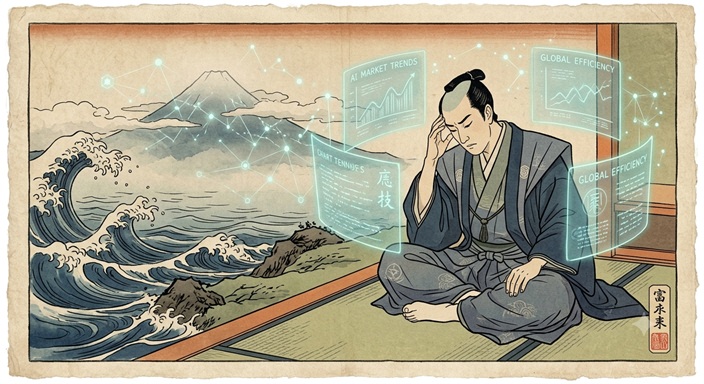
CEO Mental Health in the Age of Constant AI Disruption
The role of a CEO has always been synonymous with pressure, but the current era of AI disruption has introduced a new, relentless dimension to executive stress. We are living through a period of technological change that moves not by the year, but by the week. For leaders responsible for steering the ship, the fear of missing out on a competitive advantage has morphed into a deeper, more existential anxiety.
At Exponential Agility, we see leaders who are exhausted. The burden is no longer just about meeting quarterly targets or managing human teams; it is about navigating a landscape where the rules of business are being rewritten in real-time. CEOs feel the weight of a dual responsibility: they must remain the steady anchor for their employees during times of uncertainty while simultaneously acting as the visionary architect of a transformation they might not fully understand themselves.
This pressure creates a specific type of psychological toll. It is the exhaustion of constant vigilance. When the speed of innovation outpaces the speed of organizational adaptation, the gap between expectation and reality widens. This leads to decision fatigue, imposter syndrome, and a pervasive sense of being left behind. Many leaders are struggling to balance the need for rapid AI integration with the need for thoughtful, human-centric leadership.
The emotional cost of this disruption is often ignored in boardrooms. We treat strategy as a cold, analytical process, but the ability to lead through change is deeply rooted in emotional regulation. If a CEO is operating from a place of fear or burnout, their decision-making becomes reactive rather than proactive. You cannot foster an agile culture if your own cognitive resources are depleted by the frantic pace of the market.
To thrive, leaders must shift their perspective. Instead of viewing AI as a tsunami you must outrun, view it as a tool you must govern. Resilience in this age does not come from working longer hours to master every new model or algorithm. It comes from radical prioritization and the courage to say no to distractions. It involves building high-trust teams that can handle the technical implementation so that you can focus on the human strategy.
Mental health is not a luxury for the executive suite; it is a strategic imperative. If you are burning out, your organization will eventually follow suit. Taking the time to disconnect, reflect, and ground yourself is not an act of negligence—it is the most important work you can do to ensure your company survives the next wave.
Are you feeling the weight of the AI revolution? Contact Artilecto today to learn how to build a resilient leadership framework that protects your well-being while driving innovation.