
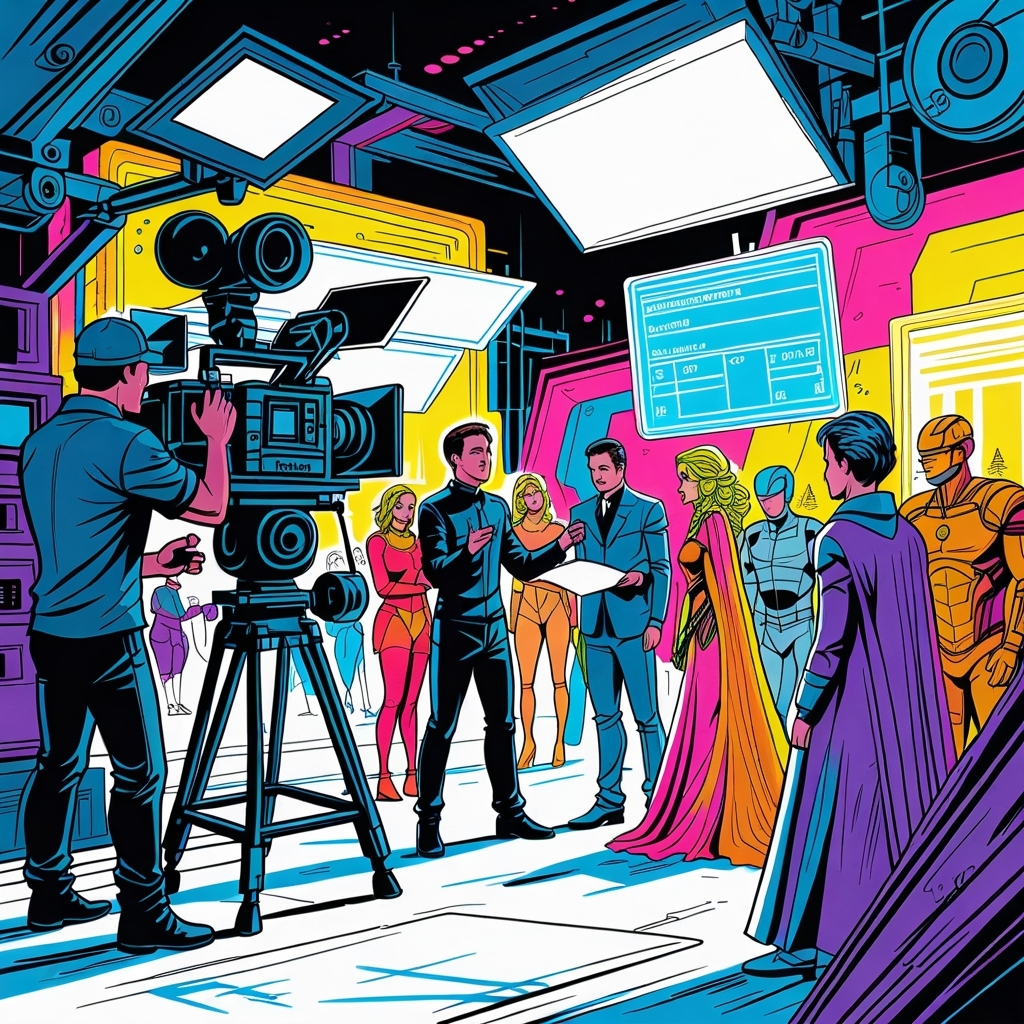
AI Is Now Writing Entire Movies — Hollywood Insiders Are Terrified and Here’s Why
Something seismic is happening in Hollywood, and the industry will never be the same. Generative AI has moved well beyond writing a few punchy dialogue lines or suggesting plot tweaks. In 2026, entire feature-length screenplays are being drafted, revised, and production-ready before a single human writer touches the keyboard.
The numbers tell a brutal story. Industry analysts estimate that major studios are now using AI tools in some capacity on over 60 percent of active development projects. Tools like Runway, Sora, and several proprietary studio platforms can now generate full scripts, storyboards, and even rough cut sequences in hours rather than months.
One anonymous development executive at a major streaming platform put it plainly: “We greenlit three projects last quarter where AI handled the first three drafts entirely. The writers we brought in were essentially editors at that point. Nobody wants to say it out loud, but the math is obvious.”
The Writers Guild of America has been sounding alarms since the historic 2023 strike forced studios to agree to AI disclosure rules. But enforcement has proven difficult. “The agreements we fought for are being quietly circumvented,” said a WGA spokesperson in a recent statement. “Studios are classifying AI-generated drafts as internal development documents, which sidesteps our negotiated protections entirely.”
Real examples are already circulating. A thriller released on a major streaming platform earlier this year was reportedly structured entirely by an AI system, with human writers hired afterward to add cultural nuance and sharpen character voice. The film performed solidly, which is precisely what terrifies the creative community. Studios do not care about the process. They care about the outcome.
Directors are not immune either. AI-assisted pre-visualization tools now allow producers to simulate entire sequences before a director is even attached to a project. One veteran filmmaker described the experience as “being handed a painting and told to touch it up.” The creative control that once defined a director’s power is being quietly redistributed upward to producers and platform algorithms.
The economic argument is impossible to ignore. A traditional screenplay can cost anywhere from $150,000 to several million dollars when factoring in rewrites, polish drafts, and writer fees. An AI-generated first draft costs a fraction of that. For studios operating under intense pressure from shareholders and subscriber metrics, the temptation is overwhelming.
What does this mean for storytelling itself? Critics argue that AI-generated content tends toward the statistically average, producing stories that feel familiar but hollow. Audiences may not notice immediately, but the cumulative effect of algorithm-driven narratives could flatten the diversity and risk-taking that cinema has always depended on for cultural relevance.
The human element in storytelling is not just a romantic notion. It is the source of everything that has ever made a film matter — the specific, painful, joyful, irreplaceable perspective of a person who has actually lived something worth telling.
Hollywood is at a crossroads that cannot be negotiated away or quietly managed. The industry must decide what it actually values before the decision gets made for it.
Want to stay ahead of how AI is reshaping creative industries and business strategy? Subscribe to the Artilecto newsletter and join thousands of forward-thinking leaders navigating the age of intelligent machines.
