
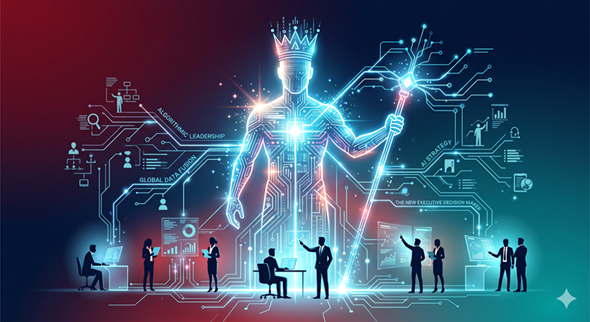
The Rise of the Algorithmic CEO
For decades, the image of the CEO has been defined by gut instinct, charisma, and the ability to navigate ambiguity. We celebrate the maverick leader who bets the company on a hunch. However, as we witness the rapid integration of artificial intelligence into the executive suite, a new archetype is emerging: the Algorithmic CEO.
We are moving toward a paradigm where the primary role of leadership is shifting from intuition to interpretation. Modern AI systems can now process millions of data points—from supply chain fluctuations to real-time consumer sentiment—far faster than any human brain. When these systems offer a strategic path forward, the temptation to follow the output with zero deviation is becoming an organizational reality. After all, if the algorithm has a 95 percent accuracy rate in predicting market shifts, why would a CEO choose to deviate?
The allure of this model is efficiency. In a world of exponential change, speed is a competitive advantage. The Algorithmic CEO eliminates the cognitive biases that often lead to poor decision-making. By delegating complex strategy to AI, leaders can theoretically remove the human error that has historically sunk empires. Yet, this raises a profound philosophical question: is a leader still a leader if they are merely an executor of machine logic?
The danger of zero-deviation adoption lies in the ‘black box’ problem. Algorithms operate on historical data, which makes them exceptional at optimizing the known but potentially disastrous at navigating the unprecedented. If every company in a sector adopts the same AI-driven strategies, we risk a homogenization of the market where innovation dies in favor of optimized equilibrium. True leadership often requires the courage to ignore the data when the context demands a leap of faith that no machine could ever justify.
Perhaps the future of leadership is not the replacement of the CEO, but the evolution of the role into a bridge between algorithmic precision and human nuance. The most successful executives will be those who use AI to build the roadmap but retain the wisdom to change course when the destination no longer serves a greater purpose. We are not approaching a future of robotic leaders; we are approaching an era where the most effective leaders know exactly when to trust the machine and exactly when to override it.
The rise of the Algorithmic CEO does not signal the end of human judgment, but rather the beginning of a higher standard for it. The question is no longer whether we can automate strategy, but whether we have the discipline to remain the master of our own tools.
Are you ready to integrate AI into your leadership strategy, or are you concerned about losing the human touch? Let us discuss the future of decision-making in the comments below.