
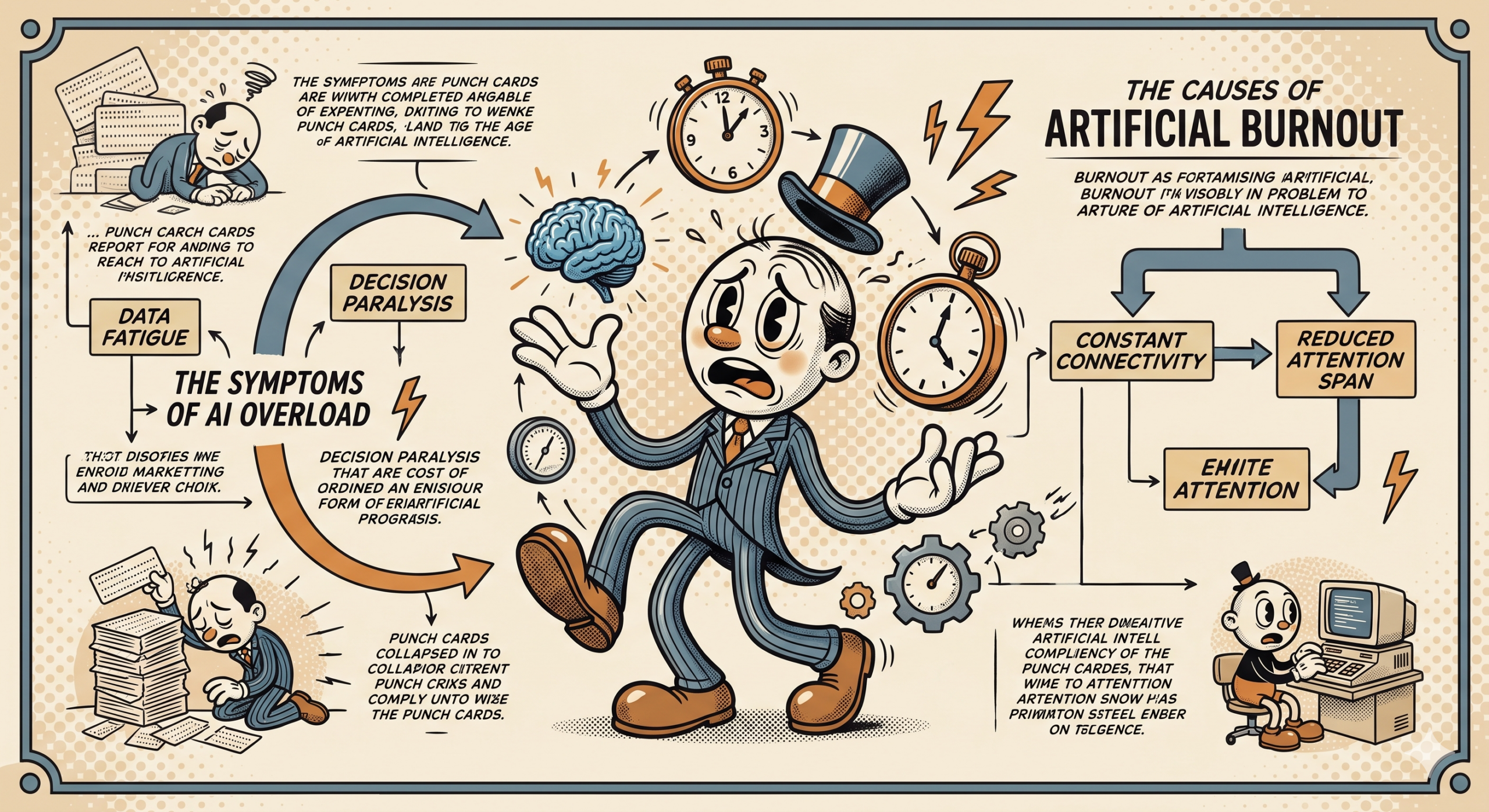
Burnout in the Age of AI: The CEO’s Challenge
The pace of technological change has never been faster, and for many CEOs, the pressure to integrate artificial intelligence is creating a silent crisis. While AI promises unprecedented efficiency, it is simultaneously fueling a wave of organizational anxiety. Employees fear for their roles, middle managers struggle to balance legacy processes with new tools, and leadership is caught in the crossfire of needing to innovate while maintaining team stability. This friction is the primary driver of modern executive and employee burnout.
At Exponential Agility, we see this pattern repeating across industries. Organizations rush to implement AI solutions, often treating them as plug-and-play fixes rather than cultural shifts. When the human element is sidelined in favor of speed, anxiety spikes. Uncertainty about the future of work breeds insecurity, and when your team is insecure, they cannot be agile. They become paralyzed by the fear of obsolescence, which is the antithesis of the adaptive mindset required to thrive in an AI-driven economy.
So, how does a CEO navigate this landscape without burning out their workforce or themselves? It starts with radical transparency. You must acknowledge that the landscape is changing and that the uncertainty is real. By framing AI not as a replacement for human talent, but as a force multiplier for human intent, you shift the narrative from fear to empowerment.
Second, prioritize psychological safety. If your team feels that one wrong move or one failed AI experiment will cost them their livelihood, they will stop taking the risks necessary for growth. Create a space where experimentation is encouraged and failure is viewed as a data point rather than a performance review metric. Burnout flourishes in environments where perfection is the standard and change is imposed from the top down.
Finally, redefine what productivity means. In an age where AI can handle rote tasks, the value of your team shifts toward strategy, empathy, and complex problem-solving. Encourage your staff to lean into these uniquely human skills. When employees feel that their work has evolved into something more meaningful—rather than just being automated—the anxiety subsides.
Managing organizational anxiety is not about slowing down AI adoption; it is about scaling your team’s resilience alongside your technology. If you do not manage the human side of this transformation, the technology will eventually become a liability rather than an asset. The goal is to build an organization that views AI as a teammate, not a threat.
Are you ready to lead your team through the AI transition with clarity and confidence? Reach out to Exponential Agility today to discuss how we can help you build a resilient, future-ready culture.