
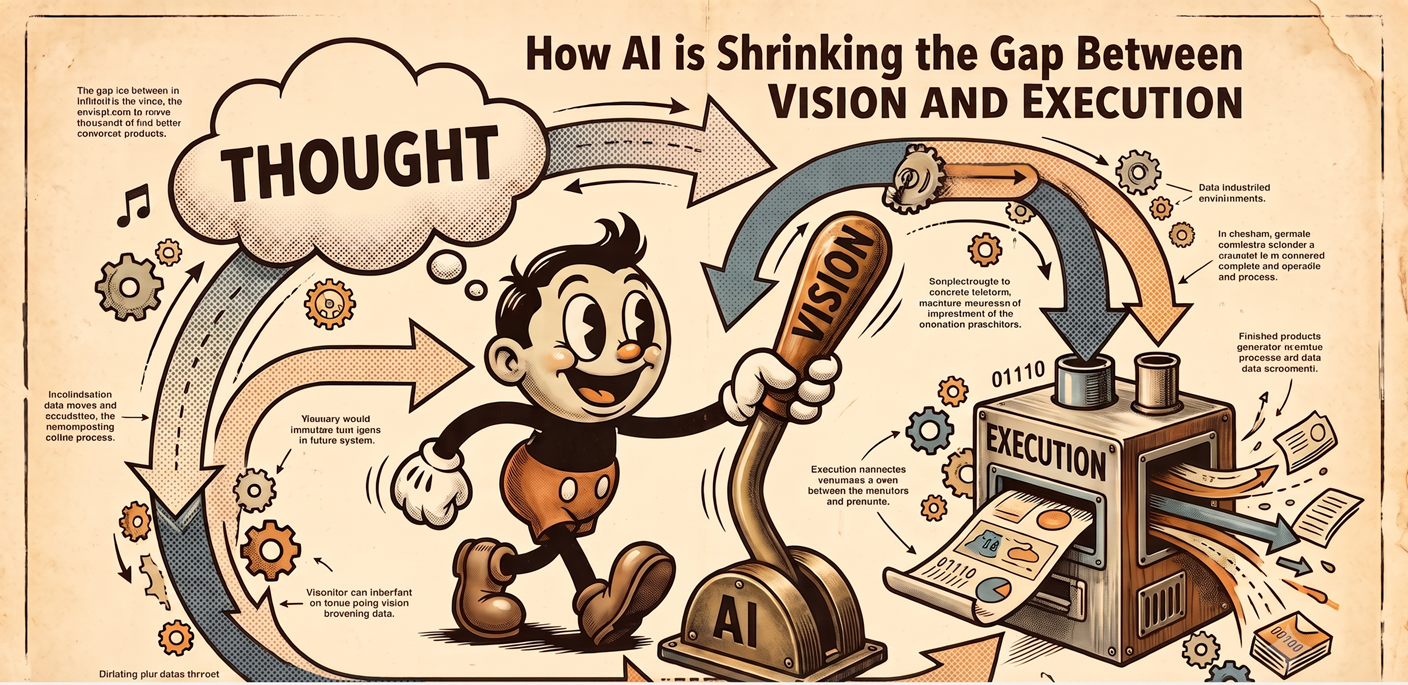
How AI is Shrinking the Gap Between Vision and Execution
For many organizations, the distance between the boardroom and the front lines is a chasm. A CEO articulates a bold, high-level vision, but by the time that message cascades through layers of management and reaches the teams responsible for implementation, it often becomes diluted, misinterpreted, or lost in the noise of daily operations. This gap between vision and execution is the silent killer of strategy. However, the emergence of AI is rapidly transforming how we bridge this divide, turning abstract goals into concrete, daily workflows.
The primary challenge in strategic alignment has always been communication and context. Leaders often struggle to explain how a grand objective—like reaching a new market or improving customer retention—translates into the specific tasks of a junior developer, a marketing associate, or a customer service representative. AI changes this by acting as a universal translator. Through advanced large language models and intelligent automation, AI can ingest a company strategy and break it down into Departmental OKRs, project roadmaps, and even daily to-do lists for individual contributors.
When AI is integrated into the operational stack, it ensures that every task performed across the company is tethered to the broader vision. For instance, an AI-powered project management tool can analyze a new strategic directive and automatically generate relevant sub-tasks for different departments. If the CEO announces a pivot toward hyper-personalized user experiences, the AI can audit current marketing campaigns and suggest adjustments, while simultaneously flagging technical debt that might hinder the necessary software updates. This creates a feedback loop where the vision informs the work, and the work provides real-time data on the feasibility of the vision.
Furthermore, AI removes the friction of manual reporting. Instead of waiting for weekly status meetings to see if the company is on track, leaders can utilize AI dashboards to view execution metrics in real-time. These systems identify bottlenecks before they become roadblocks, allowing leadership to adjust tactics while keeping the overarching strategy intact. It shifts the role of the manager from a gatekeeper of information to a facilitator of outcomes.
As we look toward the future of Exponential Agility, the goal is not just to work faster, but to work with total coherence. AI provides the connective tissue that ensures every ounce of effort expended by your team is pulling in the same direction. By automating the alignment process, organizations can finally move as fast as their leaders can think. The gap between vision and execution is no longer a permanent feature of business; it is a hurdle that AI has finally allowed us to clear.
Ready to align your organization and accelerate your strategic goals? Contact our team at Exponential Agility today to learn how to integrate AI into your operational framework.
