
Is Your Board Ready for an AI-Powered CEO?
The vision of an AI-powered CEO is no longer confined to the pages of science fiction. As artificial intelligence advances, we are seeing a shift where algorithmic decision-making, predictive analytics, and automated operational oversight are becoming core components of executive strategy. However, while the technology is ready, the boardroom often is not. Implementing AI at the executive level introduces a unique set of governance challenges that demand a fundamental rethink of traditional leadership structures.
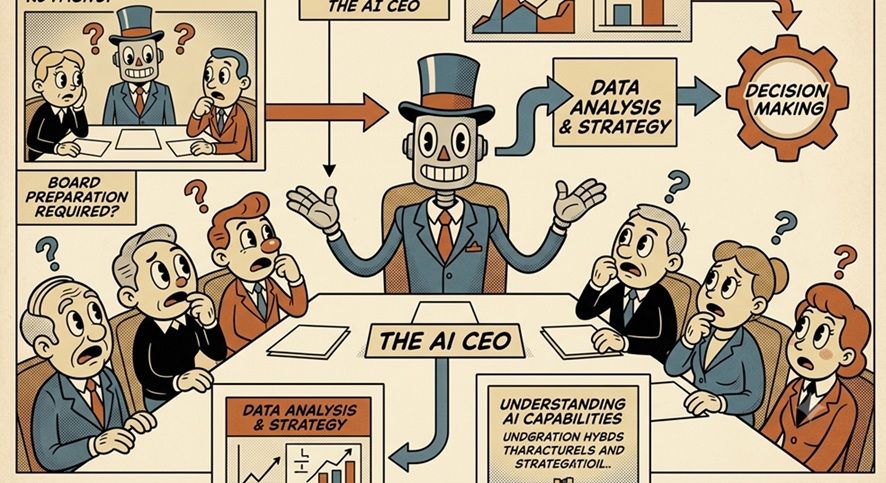
The primary hurdle is the inherent skepticism found in many boardrooms. Directors are tasked with the fiduciary responsibility of stewardship and risk management. When a CEO proposes delegating critical strategic choices or operational oversight to an AI system, the board naturally questions accountability. Who is responsible when an algorithm makes a high-stakes error? How do you audit a black-box decision process that lacks human intuition or moral nuance? These are not just technical questions; they are existential inquiries into the nature of corporate governance.
To bridge this gap, boards must move beyond basic digital literacy. They need to evolve their governance frameworks to include AI ethics, data integrity, and algorithmic transparency. A board that is ready for an AI-powered CEO is one that understands the difference between automated efficiency and strategic judgment. The goal is not to replace the CEO with a machine, but to augment the executive role with a high-fidelity, real-time intelligence layer.
Skepticism at the board level is healthy, but it must be channeled into productive inquiry. Instead of asking if AI can replace the CEO, boards should be asking how AI can remove the cognitive biases that often lead to poor executive decisions. They should be evaluating how AI can surface invisible market trends faster than any human team and how it can ensure that executive actions remain aligned with long-term corporate values.
Transitioning to an AI-enabled executive suite requires a culture of radical transparency. Boards must demand visibility into the training data and the guardrails placed around AI tools. They must also define clear lines of human intervention. The most successful organizations will be those where the board provides the ethical and strategic oversight, while the AI provides the speed and analytical depth.
Ultimately, the board serves as the final check and balance. If your board is still viewing AI as an IT issue rather than a governance imperative, you are already falling behind. The question is not whether AI will influence the boardroom, but whether your current governance structure is agile enough to harness that power without losing its way.
Is your board equipped to navigate the future of AI-driven leadership? Contact Artilecto today to discuss how we can help your organization bridge the gap between innovation and governance.