Why 70% of CEOs Will Be Replaced by AI-Driven Systems by 2030
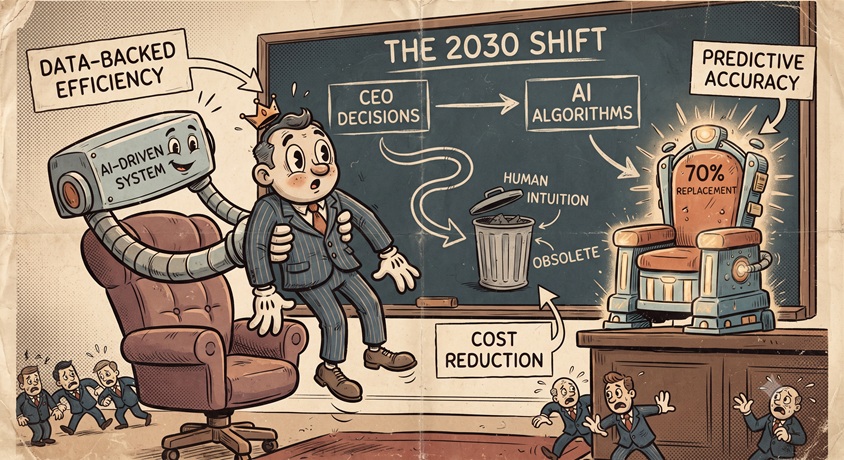
The corner office is undergoing a seismic shift. For decades, the role of a CEO has been defined by information processing, strategic calculation, and the ability to synthesize vast amounts of data to drive quarterly outcomes. However, we are rapidly approaching a tipping point. Current trends in automated decision-making suggest that by 2030, as many as 70 percent of current CEO functions will be managed more effectively by AI-driven systems.
This transformation is not a distant sci-fi prophecy; it is a mathematical inevitability. AI models already outperform human executives in pattern recognition, market trend forecasting, and operational efficiency. When an algorithm can analyze global supply chains, consumer sentiment, and financial risks in milliseconds, the traditional human role of a data-driven strategist becomes redundant. If your job is primarily to process input and output a tactical decision, you are already competing against a system that never sleeps, never suffers from cognitive bias, and scales infinitely.
So, where does this leave the human executive? As logic and calculation are outsourced to machines, the value of the human leader shifts toward the final frontier of organizational success: soft skills.
In an AI-dominated landscape, the ability to command technical data will be a commodity. The true differentiator will be the capacity for deep human connection. Leadership is increasingly about navigating the complexities of human emotion, fostering authentic culture, and managing radical uncertainty. An AI can optimize a workflow, but it cannot inspire a workforce through a period of existential crisis. It cannot navigate the nuanced politics of a stakeholder merger with genuine empathy, nor can it mentor a high-potential employee with personal intuition.
The CEOs who survive and thrive in 2030 will not be the ones who act like machines. They will be the ones who lean into their humanity. They will focus on high-level vision, ethical stewardship, and the cultivation of purpose-driven environments. Their role will evolve from being the primary decision-maker to becoming the Chief Integration Officer—the person responsible for harmonizing the cold, hard efficiency of AI with the messy, vibrant, and essential needs of human beings.
The era of the purely analytical executive is ending. The era of the Empathetic Architect is beginning. If you are still relying on your ability to out-think the computer, you are fighting a losing battle. It is time to pivot your focus toward the skills that machines cannot replicate. The future of leadership belongs to those who understand that while data provides the map, humanity provides the soul of the business.
Are you preparing your leadership style for the AI revolution, or are you waiting to be replaced? Contact Artilecto today to audit your leadership strategy and future-proof your career.