
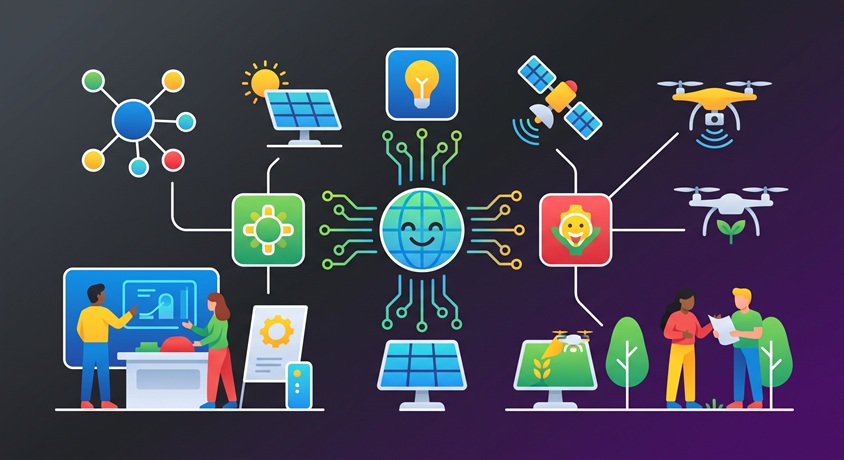
Democratizing Exponential Tech for Global South Innovations
We are standing on the precipice of a new era defined by the convergence of artificial intelligence, biotechnology, and quantum computing. These exponential technologies hold the key to solving humanity greatest challenges, from eradicated diseases to sustainable energy. Yet, a critical question remains. Will this revolution uplift the entire global community, or will it widen the chasm between the developed world and the Global South?
Historically, technological revolutions have followed a predictable and exclusionary pattern. Innovations were created in wealthy nations, protected by strict intellectual property laws, and exported to developing countries as finished, expensive products. This dynamic kept the Global South in a perpetual state of technological consumerism rather than creation. If we allow this pattern to repeat with exponential tech, the consequences will be catastrophic, locking developing economies out of the most lucrative industries of the future.
Democratizing exponential tech is not merely an act of charity. It is a strategic imperative for global progress. The Global South is home to immense untapped talent, unique ecological perspectives, and urgent localized problems that demand cutting-edge solutions. To ensure these nations lead and benefit from the AI-biotech-quantum revolution, we must fundamentally rethink how technology is developed, funded, and shared.
The first strategy involves open-source infrastructure and localized compute power. AI models and quantum algorithms cannot remain locked behind corporate paywalls. By fostering open-source ecosystems, we enable researchers in Nairobi, Sao Paulo, and Jakarta to build upon foundational models without prohibitive costs. Furthermore, investing in regional data centers and quantum access hubs ensures that the intellectual property remains where the problems are lived.
Second, we must reinvent educational frameworks and venture capital models. Traditional tech hubs in Silicon Valley or London often fail to recognize the immense market potential of grassroots innovations in developing regions. Venture capital must evolve to support local founders who understand regional contexts. Concurrently, educational initiatives need to shift from rote learning to advanced computational biology and quantum literacy, empowering the next generation of scientists to become creators, not just users.
Ultimately, the true measure of exponential technology is not how fast it processes data, but how broadly it elevates humanity. By intentionally bridging the digital divide and empowering innovators in the Global South, we can unlock a renaissance of inclusive scientific discovery. The future of exponential tech belongs to everyone, or it fails us all.
How can your organization support tech democratization in the Global South? Join the conversation in the comments below.