
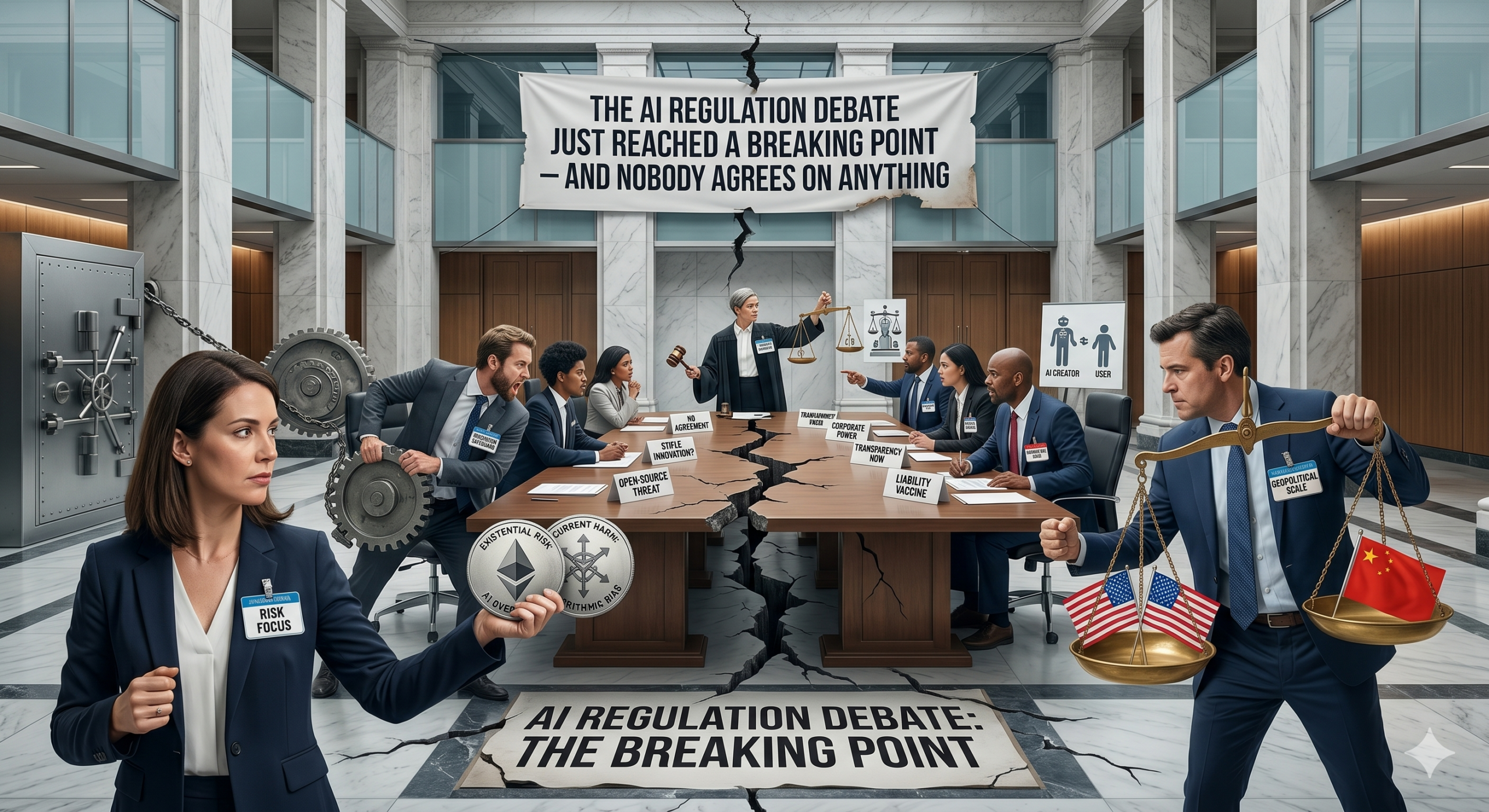
The AI Regulation Debate Just Reached a Breaking Point — And Nobody Agrees on Anything
Something is breaking open in the world of AI governance. In 2026, the global conversation about how to regulate artificial intelligence has moved from polite disagreement to outright legislative warfare, and the consequences for both innovation and public safety could not be higher.
The European Union pressed forward with its landmark AI Act, one of the most comprehensive regulatory frameworks ever attempted for a technology sector. Enforcement mechanisms kicked in this year, forcing companies to classify their AI systems by risk level and comply with strict transparency requirements. Tech giants pushed back hard, with several threatening to limit services in EU markets rather than comply with what they called overreaching mandates.
Meanwhile, the United States remains deeply fragmented. The federal government has struggled to pass unified AI legislation, leaving a patchwork of state-level laws that has businesses pulling their hair out. California, Texas, and New York have each introduced competing frameworks with contradictory requirements around data use, algorithmic accountability, and liability. Lobbying spending on AI-related legislation hit record highs in Washington, with both pro-innovation groups and safety advocates pouring money into shaping whatever policy eventually emerges.
China is playing an entirely different game. Its government accelerated AI deployment across public infrastructure while tightening ideological controls on generative content. Critics argue this creates a two-tiered global AI landscape where democratic nations tie themselves in regulatory knots while authoritarian governments move at full speed with no meaningful oversight.
The expert community is just as divided. Some researchers argue that heavy regulation at this stage will strangle transformative breakthroughs in healthcare, climate modeling, and scientific discovery before they reach their potential. Others insist that waiting for harm to manifest before acting is reckless, pointing to documented cases of AI-driven misinformation, hiring discrimination, and autonomous system failures as early warning signs that cannot be ignored.
The lobbying battles have gotten ugly. Internal documents leaked from several major AI labs revealed coordinated efforts to water down safety requirements while publicly championing responsible development. Consumer advocacy groups responded with sharp criticism, and several congressional hearings erupted into visible tension between lawmakers, industry representatives, and independent researchers who could not agree on basic definitions, let alone solutions.
What is genuinely at stake here is not abstract. The regulatory choices made in the next twelve to twenty-four months will shape who controls the most powerful technology in human history, who bears the risk when things go wrong, and whether smaller companies and developing nations even get a seat at the table. Get it wrong in one direction and you slow down medicine, energy, and education breakthroughs by a decade. Get it wrong in the other direction and you hand unchecked power to a handful of corporations with no democratic accountability.
The breaking point is real, and the noise is only going to get louder. The question is whether any government, coalition, or international body has the clarity and courage to cut through it.
If you want to stay sharp on how AI policy shifts are reshaping business strategy and competitive advantage, subscribe to the Exponential Agility newsletter and join the conversation.
