
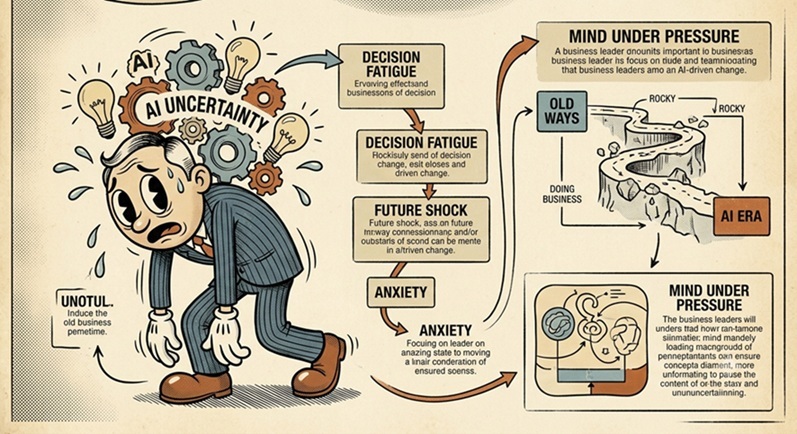
The Psychological Toll of Leading Through AI Change
We are living through a period of technological transformation that feels less like a shift and more like a seismic event. For leaders, the pressure to integrate Artificial Intelligence is not just a strategic or operational burden; it is a profound psychological one. When you are tasked with steering an organization through the uncharted waters of AI, the weight of the unknown can be overwhelming.
The primary source of this stress is the illusion of control. Leaders are expected to have a roadmap, a vision, and a clear set of outcomes. Yet, with AI, the landscape changes week by week. This creates a cognitive dissonance where you feel pressured to act decisively while simultaneously realizing that the technology you are betting on is still evolving. This gap between the expectation of mastery and the reality of ambiguity leads to decision fatigue, anxiety, and a constant, low-level hum of imposter syndrome.
Beyond the technical hurdles, there is the human element. Leading through AI change means navigating the collective fear of your workforce. As a leader, you are the container for your team’s anxieties. You must balance the push for innovation with the empathy required to support staff who fear for their roles. This emotional labor is exhausting. You are essentially managing a transition where you do not have all the answers, yet you must project the confidence required to keep the ship moving forward.
Furthermore, the velocity of AI development prevents the usual period of reflection. In traditional business cycles, there is time to implement, observe, and adjust. In the age of AI, the window for adjustment is shrinking. This constant state of high-alertness keeps the nervous system in a fight-or-flight mode, which is unsustainable. Many leaders find themselves burning out not because they lack capability, but because they are operating in a persistent state of hyper-vigilance.
To survive and thrive, we must redefine what it means to be an agile leader. It is not about knowing everything; it is about building the psychological infrastructure to handle uncertainty. It requires shifting from a mindset of command-and-control to one of experimentation and adaptive resilience. You must give yourself permission to be a learner rather than an expert.
The toll of this transition is real, but it is not inevitable. By acknowledging the psychological strain, you can begin to prioritize your own mental clarity and foster a culture where experimentation is safer for everyone. Remember that your ability to lead through this change depends less on your technical prowess and more on your capacity to remain grounded when the ground itself feels like it is shifting.
If you are feeling the pressure of leading your team through this AI-driven era, reach out to Artilecto today to discuss how we can help you navigate this transition with clarity and confidence.

Related Posts

People Of The Rain.

People Of The Rain.