
The End of the Middle Manager: What This Means for Your Org Chart
For decades, the middle manager has been the glue of the corporate world. They were the translators who turned executive strategy into frontline execution. They managed calendars, tracked KPIs, resolved inter-departmental friction, and acted as the primary conduit for information flow. But as artificial intelligence integrates into the fabric of our operations, the traditional middle management layer is facing an existential crisis.
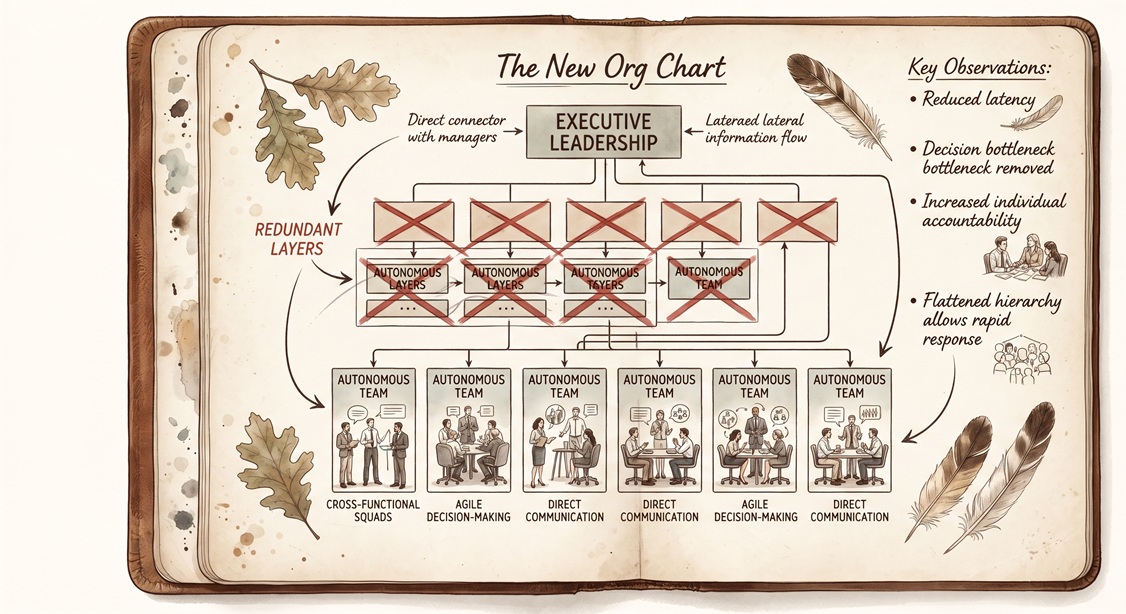
We are moving toward a period of structural flattening. When AI takes over the oversight functions—data synthesis, resource allocation, real-time performance monitoring, and status reporting—the necessity for a human intermediary to manage the flow of information evaporates. In an AI-augmented environment, the gap between the executive vision and the individual contributor shrinks. The algorithm can now provide the clarity that once required three layers of meetings and status emails.
This shift does not mean that leadership is dead, but it does mean that the definition of a manager is undergoing a radical transformation. In the old model, managers were glorified traffic controllers. In the new model, managers must become coaches, mentors, and architects of culture. If your organization still relies on middle managers primarily to chase deliverables and oversee output, you are harboring a layer of inefficiency that will soon become a competitive liability.
The organizations that will thrive in this new era are those that embrace a leaner, more agile structure. By removing the bureaucratic buffers that AI can now manage, companies can unlock a faster speed of decision-making. Frontline teams gain direct access to data and strategic context, empowering them to act with the autonomy of an owner rather than the dependency of a subordinate.
Flattening your org chart is not just about cost-cutting; it is about cognitive liberation. When you remove the friction of middle management, you allow your talent to move at the speed of the technology they use. The goal is to create a responsive, high-trust organization where information moves horizontally rather than getting stuck in vertical silos.
Of course, this transition requires a culture shift. Leaders must be willing to relinquish the comfort of traditional hierarchies and invest in the emotional intelligence of their teams. You are not just rearranging boxes on a chart; you are redesigning how work actually gets done. As the oversight functions shift to the machine, the human role must shift toward inspiration, vision, and the complex interpersonal dynamics that AI still cannot replicate.
The end of the middle manager is not a tragedy. It is the beginning of a more efficient, empowered, and human-centric way of working. Is your organization ready to flatten, or are you still clinging to the old way of doing business?
If you are ready to rethink your organizational design for the age of AI, let us help you navigate the transition. Reach out to Artilecto today to schedule a consultation on optimizing your structure for the future.

Related Posts

People Of The Rain.

People Of The Rain.