
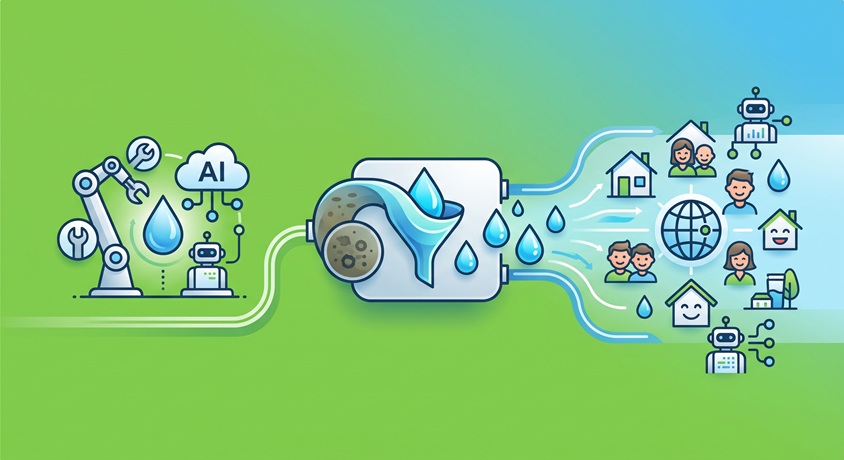
Clean Water for Billions: AI and Robotics in Action
Access to clean water is one of humanity is most critical challenges. For decades, traditional purification methods struggled to keep pace with industrial pollution, climate change, and aging infrastructure. Today, a quiet revolution is taking place at the intersection of artificial intelligence and advanced mechanics. Autonomous robotic swarms are diving into polluted lakes, rivers, and reservoirs, working tirelessly to restore global water systems.
These robotic swarms operate much like a school of fish. Each unit is equipped with advanced sensors capable of detecting heavy metals, microplastics, and harmful pathogens in real time. Powered by decentralised AI algorithms, the robots communicate with one another, mapping contamination zones and deploying targeted remediation strategies without human intervention. Whether they are deploying eco-friendly coagulants, neutralising toxins, or clearing debris, these machines adapt dynamically to changing environmental conditions.
What makes this wave of innovation truly transformative is not just the technology itself, but the economics driving it. We are witnessing a steep cost-reduction curve fueled by exponential technologies. As the components for edge-computing processors, high-efficiency solar panels, and resilient composite materials become cheaper and more accessible, the cost of deploying autonomous fleets drops dramatically. What once required millions of dollars in municipal infrastructure can now be addressed by a scalable, low-cost swarm of aquatic drones.
This deflationary trend democratises access to advanced water treatment. Developing nations and remote communities, which historically lacked the capital for massive water treatment plants, can now deploy robotic swarms for a fraction of the cost. The technology scales effortlessly. If a larger body of water requires attention, operators simply add more units to the swarm, allowing the AI to integrate the new nodes instantly.
As these intelligent systems continue to evolve, they promise a future where water scarcity and contamination are relics of the past. By combining the adaptability of artificial intelligence with the relentless endurance of robotics, we are securing a vital resource for billions of people worldwide. The technology is already in the water, and the ripple effects are changing the world.
Ready to explore how exponential tech is solving humanity is biggest challenges? Subscribe to Artilecto today.

Related Posts

People Of The Rain.

People Of The Rain.