
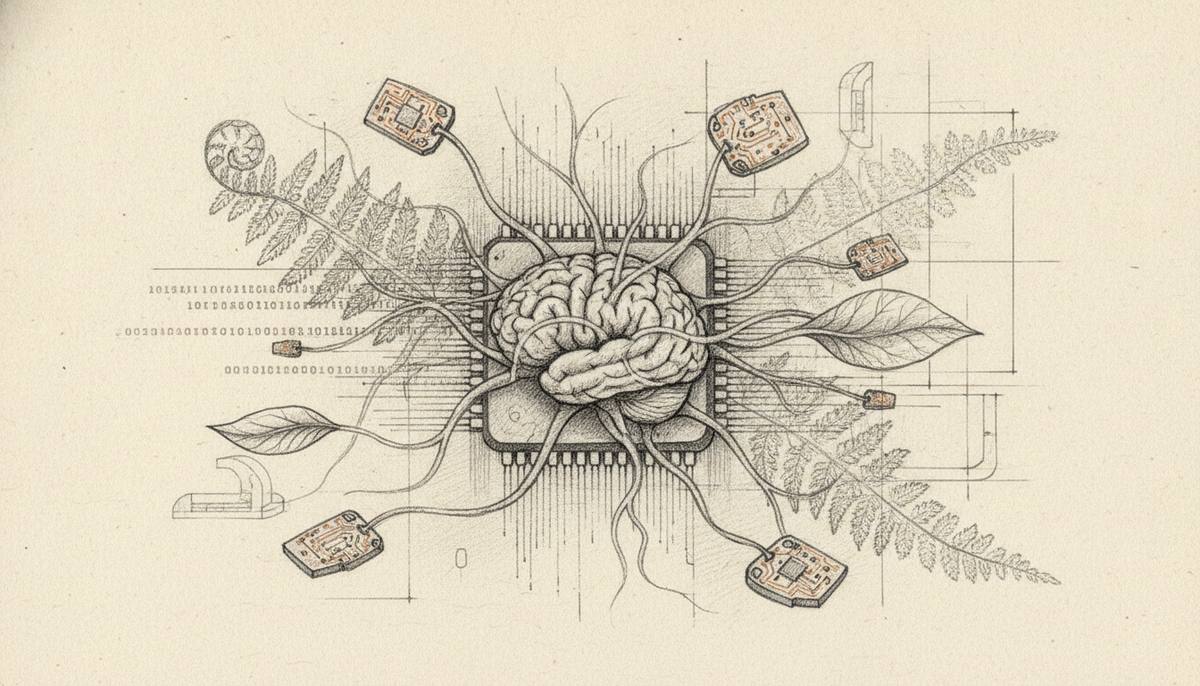
Wetware-as-a-Service: When Brain Organoids Replace Silicon
The relentless march of artificial intelligence demands staggering amounts of energy. Modern data centers consume as much electricity as small nations, all to power the brute-force calculations of massive silicon GPUs. But what if the ultimate computer is not built in a semiconductor foundry, but grown in a Petri dish? Enter wetware-as-a-service, the radical convergence of neuroscience and cloud computing.
Scientists are now cultivating human brain organoids, three-dimensional clusters of living neural tissue, and interfacing them directly with microelectrode arrays. These biological neural networks are not just simulating learning; they are physically adapting in real time. By exploiting the brain’s native architecture, these biocomputers can perform complex pattern recognition and decision-making tasks at a fraction of the energy cost required by traditional silicon hardware.
We are looking at an efficiency leap of up to one million times. While a standard GPU requires megawatts of power and extensive cooling infrastructure to process vast streams of data, living neurons thrive on tiny amounts of chemical energy. This makes biological computing an intensely attractive prospect for edge devices, autonomous systems, and massive enterprise data processing where power constraints are the ultimate bottleneck.
Yet, this paradigm shift invites profound technological and philosophical questions. Moving from silicon to organic tissue blurs the line between machine and living organism. Issues surrounding the maintenance, lifespan, and ethical handling of neural tissue in commercial server racks will dominate industry debates in the coming decade. As companies begin offering biological computing substrates via cloud APIs, developers will soon write code that runs not on microchips, but on living synapses.
The transition from silicon to wetware represents the next great evolutionary leap in computing history. Organizations that begin exploring biocomputing frameworks today will hold the keys to tomorrow’s most efficient intelligence architectures.
Are you ready to integrate biological computing into your technology stack? Subscribe to the Artilecto newsletter today for deep dives into the future of wetware and AI.

Related Posts

AI for Science: The End of Trial-and-Error Agriculture

Agentic ROI in the Wild: Replacing Dashboards with Action