Democratizing Physical AI: Open-Source World Models for the Global South
Artificial intelligence has rapidly transformed from a digital novelty into a physical force. Today, we stand on the precipice of Physical AI, where machines do not just process text or images, but navigate, understand, and interact with the physical world. At the heart of this revolution are world models, the advanced neural networks that allow autonomous systems to simulate physics, predict outcomes, and make split-second decisions in unpredictable environments.
Yet, as it stands, the development of foundational world models is heavily centralized. A handful of heavily funded Western tech giants control the proprietary APIs and closed-weights models that power this technology. For emerging markets and the Global South, this creates a dangerous dependency. Relying on foreign, expensive cloud APIs to power local automation is not just economically unsustainable; it is an architectural vulnerability.
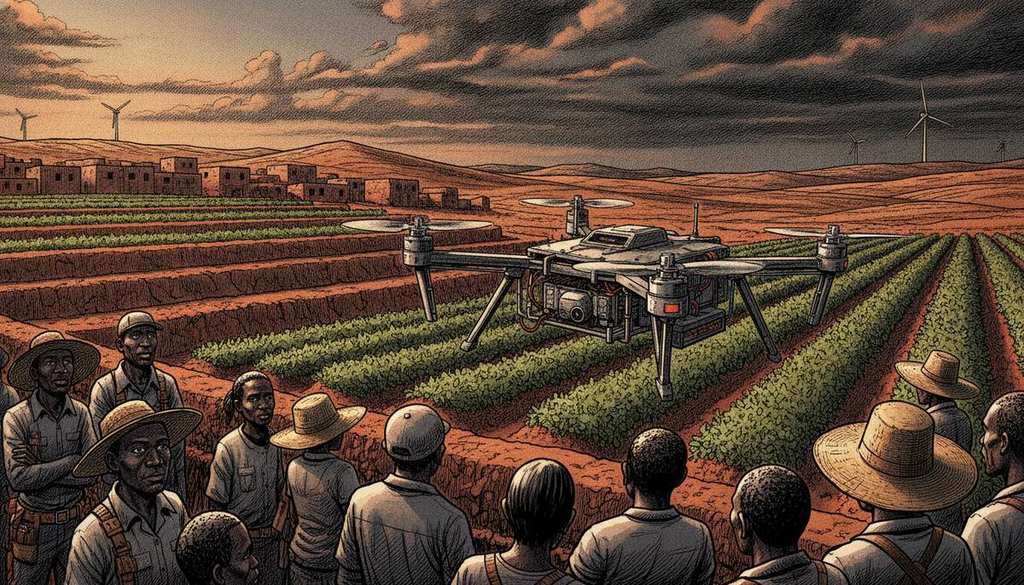
Imagine a drought-plagued farming community in Sub-Saharan Africa or a flood-prone coastal region in Southeast Asia. These areas desperately need autonomous disaster-response drones and precision agritech to protect lives and secure food supplies. Under the current paradigm, deploying these life-saving technologies requires routing local sensor data through costly foreign infrastructure, subject to latency, internet outages, and arbitrary pricing shifts. This is not democratization. This is digital neo-colonialism masked as innovation.
To truly unlock the potential of Physical AI, we must champion the immediate release of open-weights world models. By making these foundational architectures publicly available, we shift the power from Silicon Valley boardrooms to local engineers, researchers, and communities. Open-weights models allow developers in emerging economies to fine-tune systems on local data, adapting autonomous drones to indigenous terrain, unique weather patterns, and specific agricultural needs without sending a single byte of sensitive national data overseas.
Open-source physical AI ensures that innovation is not gated by subscription fees. It empowers universities in developing nations to train students on state-of-the-art architectures, fostering self-sustaining tech ecosystems. It allows local startups to build resilient, offline-first robotics that can save lives during earthquakes or cyclones without waiting for permission or cloud connectivity from the other side of the planet.
At Artilecto, we believe that the physical world cannot be owned by a few, and the intelligence that navigates it must be open to all. The future of autonomy belongs to everyone, not just those who can afford the API call.
Join the movement. Explore our open repositories and help us build a decentralized, equitable future for Physical AI today.