Embodied AI in the Deep: World Models Navigating the Abyss
The ocean floor is a realm of absolute darkness, crushing pressure, and unpredictable currents. For decades, exploring this alien landscape meant tethered submersibles and limited human intervention. Today, a quiet revolution is unfolding in the deep sea. Autonomous underwater vehicles are no longer just following pre-programmed waypoints. They are becoming truly embodied intelligences, driven by spatial world models that allow them to comprehend, predict, and adapt to the abyss in real time.
Navigating deep-sea environments requires more than simple obstacle avoidance. Visibility is often near zero, and swirling thermal vents or sudden benthic currents can throw a multi-million-dollar machine off course instantly. To survive and operate efficiently, modern autonomous underwater vehicles utilize advanced world models. These AI architectures learn the physics of the underwater environment, enabling the machine to simulate outcomes internally before taking physical action. Instead of merely reacting to sensory input, the vehicle predicts fluid dynamics and pressure shifts, plotting a course through chaos with uncanny biological grace.
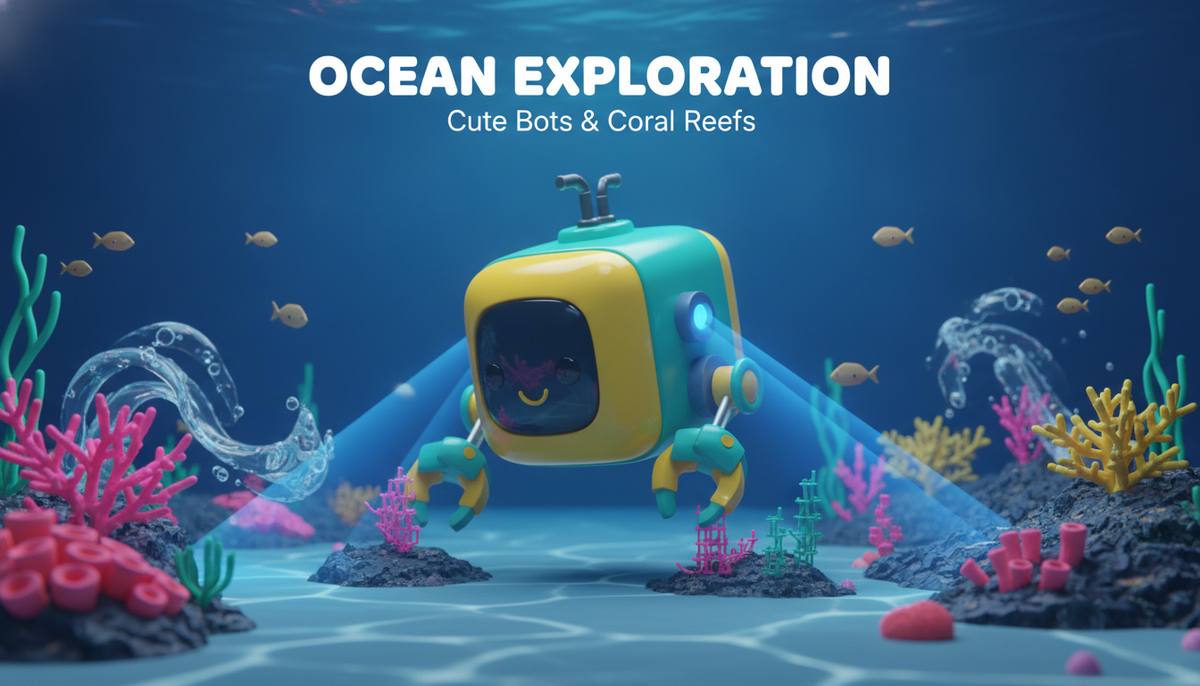
This leap in embodied intelligence is not just about exploration; it is about planetary survival. Coral reefs around the globe are facing catastrophic collapse due to warming oceans and acidification. Traditional manual restoration efforts are agonizingly slow and dangerous for human divers working at extreme depths. Enter the new breed of autonomous reef-builders. Equipped with spatial world models, these robotic submersibles map degraded reef ecosystems in high-resolution 3D, identifying the precise structural needs of each damaged zone.
Once the AI assesses the structural topography, it coordinates with on-board manufacturing systems to deploy customized solutions. The vehicles use robotic arms to place eco-friendly, 3D-printed coral scaffolds directly onto the sea floor. Because the AI understands the localized hydrodynamic forces through its predictive world model, it can wedge and anchor these scaffolds so they withstand heavy storm surges. These calcium-carbonate structures provide an immediate physical foundation for surviving polyps to latch onto, accelerating ecosystem regeneration by orders of magnitude.
By bringing embodied AI to the ocean depths, we are shifting from passive observation to active planetary healing. Autonomous machines that can model the physical world beneath the waves are turning the tide on environmental degradation. As these systems grow more sophisticated, the abyss is no longer an insurmountable frontier, but a canvas for technological restoration. The future of marine conservation is autonomous, intelligent, and deeply embedded in the natural world.
Ready to explore how spatial world models are shaping the future of autonomous robotics? Subscribe to Artilecto for weekly deep dives into embodied AI.