
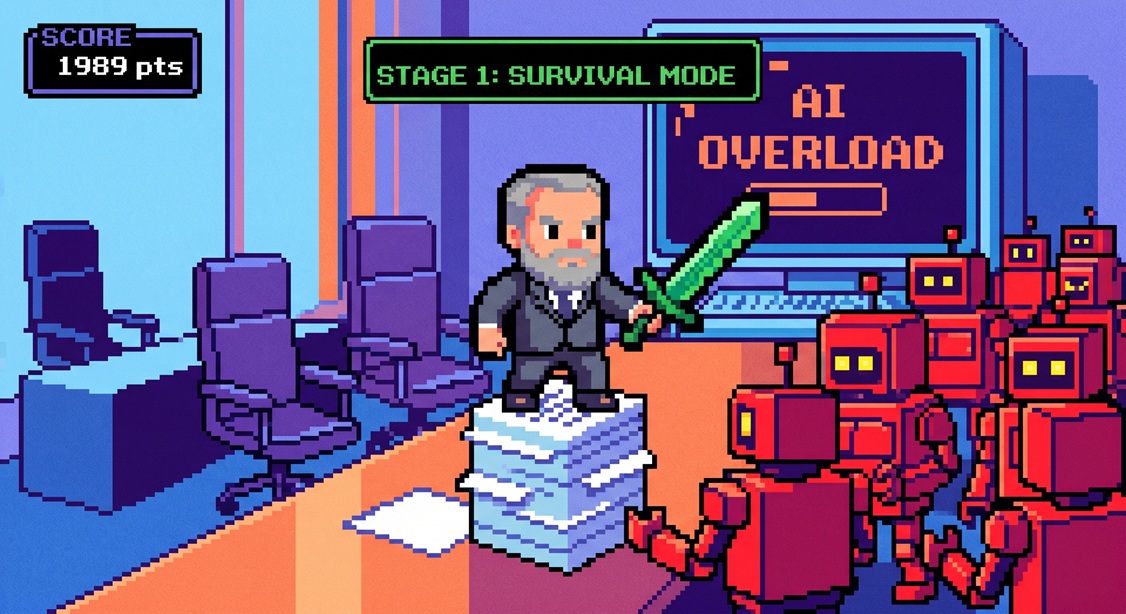
The CEO’s Guide to Surviving the AI Disruption
The AI revolution is not merely a technological upgrade; it is a fundamental shift in the economics of business. For CEOs, the challenge is no longer about whether to adopt artificial intelligence, but how to pivot the entire organizational architecture before competitors render your current model obsolete. Surviving this disruption requires a move away from incremental improvements and toward exponential agility.
The first step in this journey is shifting your mindset from AI as a cost-saving tool to AI as a business model accelerator. Many executives fall into the trap of using AI solely to automate back-office tasks. While efficiency is valuable, it is not a competitive advantage. True agility comes from embedding AI into your core value proposition. Ask yourself: if a startup were to enter my market today using only AI-native processes, what would they do differently? That answer is your roadmap.
Second, you must dismantle the silos that prevent rapid experimentation. AI thrives on data, but data is often trapped in legacy systems or departmental walls. As a CEO, your role is to foster a data-first culture where information flows freely across the enterprise. This requires investing in robust data infrastructure and, more importantly, empowering cross-functional teams to iterate quickly. In an exponential landscape, the speed of your learning cycle is your most sustainable moat.
Third, prioritize human-centric innovation. Technology is only as effective as the people wielding it. The greatest risk to your organization is not that AI will replace your workforce, but that your workforce will fail to adapt to AI-augmented workflows. Invest heavily in upskilling. Encourage a culture of curiosity where employees are incentivized to find new ways to leverage tools rather than fearing their impact. Your goal is to create a hybrid intelligence model where human intuition and machine speed work in harmony.
Finally, embrace the reality of constant recalibration. In an era of exponential growth, three-year strategic plans are effectively dead. Move toward rolling, agile strategy sessions that allow your organization to pivot based on real-time market feedback. If you are not comfortable with constant change, you are already falling behind.
The window to gain a first-mover advantage is closing, but the opportunity to redefine your industry remains wide open. The CEOs who succeed will be those who view AI not as a technical hurdle, but as the catalyst for a total organizational transformation. It is time to stop watching the horizon and start steering the ship.
Are you ready to transition your organization from traditional operations to an AI-driven, exponential model? Contact Artilecto today to schedule a strategic leadership consultation.

Related Posts

People Of The Rain.

People Of The Rain.