De Novo Biology: How Generative AI Reinvents Molecular Design
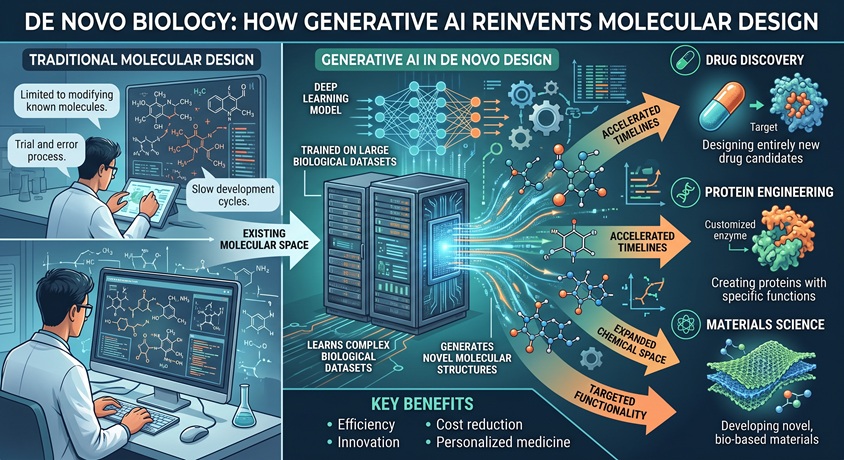
The frontier of biotechnology has shifted from reading genetic code to writing entirely new biological systems from scratch. De novo biology represents a paradigm shift where computational models do not just modify existing natural proteins, but invent novel molecular structures that have never existed in nature. Powered by advanced generative artificial intelligence, scientists are now engineering custom enzymes and synthetic proteins capable of tackling some of humanity s most complex environmental challenges.
Traditional drug discovery and enzyme engineering relied heavily on trial and error, screening vast libraries of natural organisms to find molecules that could catalyze specific chemical reactions. This process was painfully slow, often taking decades and costing billions of dollars. Today, multimodal AI models ingest massive datasets of amino acid sequences, structural motifs, and biochemical interactions. By learning the hidden grammar of biology, these algorithms can generate functional proteins tailored to precise specifications within minutes.
One of the most profound applications of this technology lies in combatting chemical toxicity and environmental pollution. For decades, synthetic plastics, persistent industrial pollutants, and toxic agricultural runoff have accumulated in our ecosystems because natural degraders cannot break them down efficiently. Generative AI is changing this narrative by designing specialized enzymes engineered specifically to consume and neutralize toxic compounds. Researchers are now deploying AI-generated plastic-eating bacteria and pollutant-neutralizing proteins that break down hazardous waste into harmless byproducts at unprecedented speeds.
Beyond bioremediation, de novo molecular design is transforming green chemistry. Industrial manufacturing processes often require harsh catalysts, high temperatures, and toxic solvents that generate immense carbon footprints. Synthetic enzymes designed by AI can operate efficiently at room temperature in aqueous solutions, replacing petrochemical catalysts with biodegradable biological alternatives. This transition not only eliminates industrial chemical toxicity at the source but also significantly reduces energy consumption across the manufacturing sector.
As generative AI continues to mature, the boundary between computer science and molecular biology will continue to dissolve. We are entering an era where computational imagination directly translates into physical reality, offering powerful new tools to heal our planet. By combining the predictive power of machine learning with the elegance of biological catalysts, de novo design is turning science fiction into practical solutions for a cleaner, safer world.
Ready to explore how artificial intelligence is transforming biotechnology and sustainability? Subscribe to Artilecto for the latest insights into the future of tech.

Related Posts

People Of The Rain.

People Of The Rain.