How AI is Shortening the Product Development Cycle
In the modern business landscape, speed is the ultimate currency. Companies that can iterate, test, and launch faster than their competitors often capture the market share that others miss. At Exponential Agility, we have observed a seismic shift in how top-tier organizations approach innovation. The secret weapon driving this transformation is not just better management, but the strategic integration of Artificial Intelligence into the product development cycle.
Traditionally, the research and prototyping phase was a bottleneck. It involved weeks of manual data analysis, tedious market research, and iterative physical prototyping that consumed both time and capital. AI has effectively dismantled these barriers, turning months of work into days.
One of the most significant advantages of AI is its ability to synthesize vast amounts of data in real-time. During the research phase, generative AI tools can scan thousands of patent filings, customer feedback loops, and market trends to identify white spaces in the industry. Instead of relying on gut instinct or slow-moving focus groups, teams can leverage predictive analytics to determine which features will resonate most with their target audience before a single line of code is written or a prototype is built.
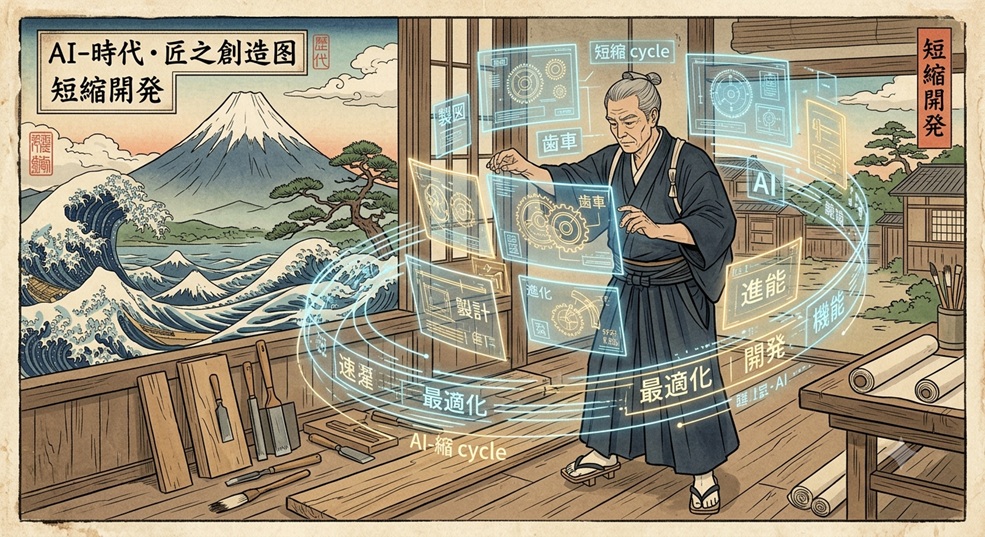
When it comes to prototyping, AI has introduced the era of rapid digital simulation. Instead of building expensive physical models, engineers now utilize AI-driven design tools that simulate performance under various conditions. These systems can run thousands of stress tests, aerodynamic models, or user experience scenarios instantaneously. If a design flaw is detected, the AI suggests immediate optimizations, allowing the team to pivot in hours rather than weeks. This iterative loop ensures that by the time a product reaches the physical prototyping stage, it is already highly refined and significantly closer to a final version.
Furthermore, AI streamlines communication and documentation across cross-functional teams. By automating the generation of technical requirements, project timelines, and compliance reports, AI removes the administrative friction that often slows down agile workflows. This allows designers, engineers, and product managers to stay focused on high-value creative tasks rather than getting bogged down in documentation.
The result is a drastically shortened time-to-market. By compressing the development cycle, companies can release products while the market is still hungry for them, rather than after the window of opportunity has closed. This is not just about doing things faster; it is about doing them smarter, with higher precision and lower waste.
As we look toward the future, the integration of AI will move from a competitive advantage to a baseline requirement. Organizations that fail to adopt these tools risk being left behind by more agile, data-informed competitors. Embracing AI is no longer optional for those who want to lead their industry.
Are you ready to accelerate your product development? Contact the team at Artilecto today to learn how we can help you integrate AI into your workflow and gain a decisive edge in the market.